Communities · By Ron Rougeaux · Published 2026-10-14 · Updated 2026-10-14
Rain-Ready in Lacey: A Practical Home Maintenance Guide for the Wet Season
Lacey, Thurston County, Washington

Quick answer
Keep your Lacey home ready for rainy weather with practical tips for gutters, drainage, indoor moisture, heating and safer outdoor spaces.
Rain is part of everyday life in Lacey, but keeping a home comfortable through the wet season takes more than a good doormat. Water needs a clear route off the roof, away from the foundation and through the drainage features serving your property. Meanwhile, damp shoes, closed windows and everyday cooking can add moisture indoors. A few steady habits help you catch small problems before they become bigger repairs.
For homeowners across Lacey, Olympia and Tumwater, October is a useful reminder to check how the house handles changing weather. You do not need to tackle everything in one weekend or wait for something to leak. At PNW Homes Group, the Olympia real estate brokerage owned by Captain Ron, Ron Rougeaux, we encourage a practical approach: observe during rain, handle safe routine tasks and bring in qualified help when needed.
Quick answer: talk to a local
Text Captain Ron at (360) 338-8355 or search homes now.
Start at the Roof and Follow the Water
Gutters and downspouts are a good first stop, particularly on Lacey properties with nearby evergreens or deciduous trees. Needles, leaves and small branches can collect at gutter outlets and roof valleys. From the ground, look for overflowing sections, sagging gutters or water running behind the gutter rather than into it. Check again after windy weather; a system that was clear earlier in the season can quickly collect fresh debris.
Have gutters cleaned safely, and use a qualified professional for roof access or repairs. Wet roofing is slippery, and moss can make footing even less predictable. Avoid pressure-washing shingles or applying a treatment without checking the roofing manufacturer’s guidance and runoff precautions. Indoors, look for new ceiling stains, damp attic insulation or musty odors. Those signs warrant investigation, but they do not automatically identify the source; condensation and plumbing problems can resemble roof leaks.
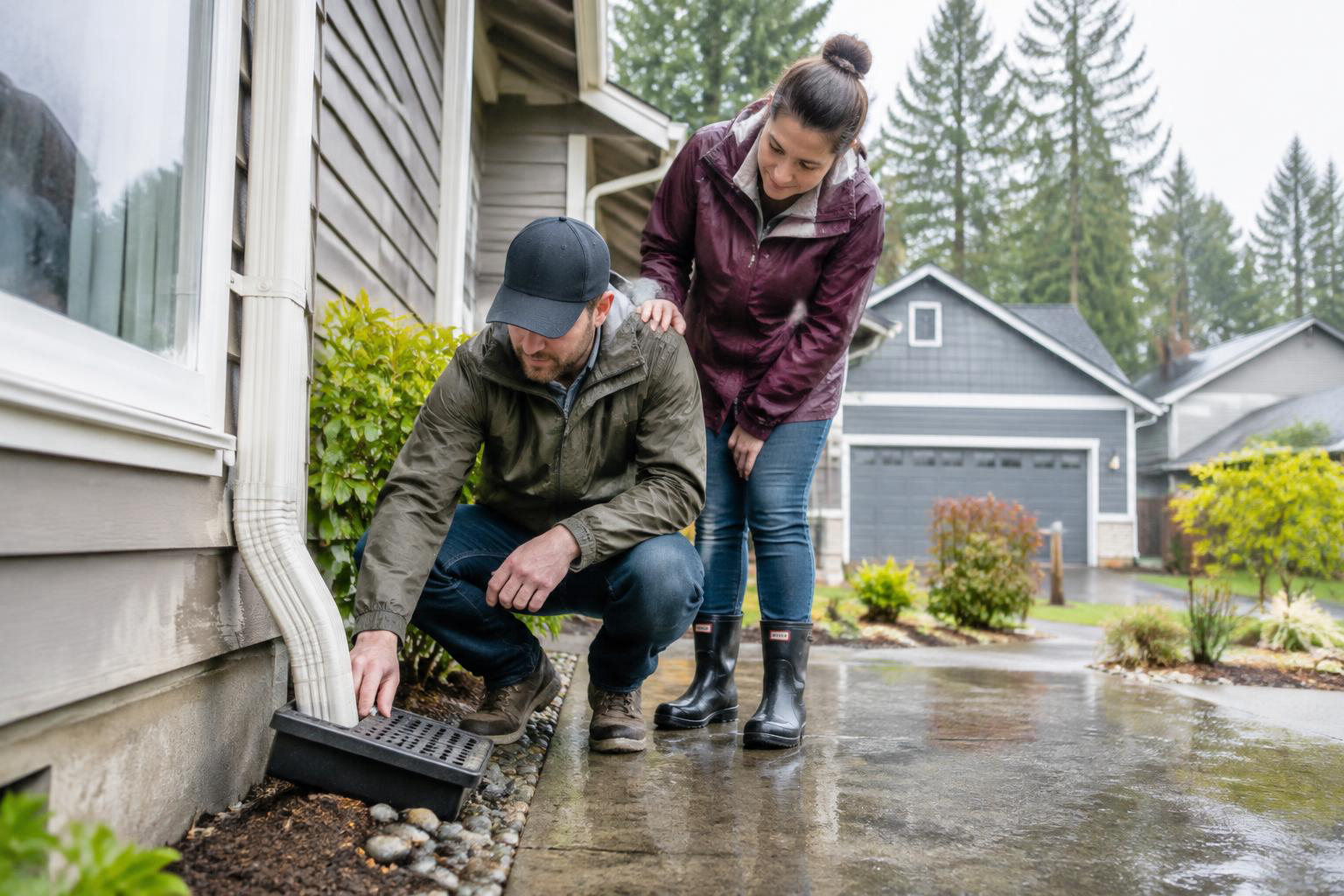
Follow each downspout to its discharge point. Water should move away from the foundation through an appropriate drainage route, not empty beside siding or create a puddle at the crawl-space entrance. If a downspout connects to an underground line, watch for backup during rain. Do not assume a buried pipe is working just because the visible gutter is clean.
Read Your Yard During a Rainstorm
One of the most useful maintenance checks costs nothing: put on a raincoat and observe your yard during ordinary rainfall, staying clear of flooded areas. Notice where water gathers, whether a walkway sends runoff toward the house and how long puddles remain afterward. Lacey properties vary in slope, soil, landscaping and drainage design, so a solution that works at a nearby home may not fit yours.
Keep accessible surface drain grates clear of loose leaves without opening structures or entering drainage facilities. If your property includes a rain garden, swale or other stormwater feature, follow its maintenance guidance rather than filling it, paving it or redirecting water around it. In a community with an HOA, ask which features are maintained by the association and which belong to individual owners.
Persistent ponding near the foundation, erosion or water entering a crawl space deserves professional assessment. Adding soil against siding or sending runoff toward a neighbor is not a sound fix. Before changing grading or connecting drainage pipes, confirm requirements with the appropriate jurisdiction. A Lacey mailing address does not necessarily mean the property is inside city limits; some homes fall under Thurston County.
Keep Indoor Moisture from Becoming a Hidden Problem
During the wet season, moisture comes from both outside and inside the house. Run bathroom exhaust fans during showers and afterward until humidity clears, and use a kitchen exhaust fan that vents outdoors when cooking. Confirm that exhaust ducts discharge outside rather than into an attic or crawl space. Recurring window condensation is a reason to check indoor humidity, airflow and cold surfaces, not simply wipe the glass and forget it.
A basic humidity monitor can help you spot patterns. Dry wet coats and shoes in a ventilated area, avoid blocking supply registers and leave room for air to circulate around furniture against cold exterior walls. A dehumidifier may help in some situations, but it is not a substitute for repairing a leak or correcting drainage. Investigate persistent musty smells, peeling finishes or damp flooring instead of masking them.
If you can safely view your crawl space from its access opening, look for standing water, displaced ground covering or visibly wet insulation. Do not enter an area with standing water, exposed wiring, animal activity or other hazards. Crawl-space ventilation and moisture control depend on the home's design, so avoid casually sealing vents or changing equipment. Have a qualified professional evaluate recurring moisture and recommend a coordinated repair.
Make Entrances, Outdoor Surfaces and Heating Rain-Ready
Lacey's wet weather can turn shaded steps, decks and walkways slick. Sweep away needles and leaves, check handrails and use a cleaning method suitable for the surface. Secure outdoor mats so they do not curl or slide, and make sure exterior lights illuminate steps and changes in elevation. At the front door, inspect the threshold and weatherstripping for gaps, wear or signs that wind-driven rain is getting inside.
Before colder weather arrives, disconnect garden hoses and protect exposed plumbing as appropriate for your setup. Have irrigation winterization handled according to the system's requirements. Store lightweight outdoor items securely, and inspect trees from the ground for broken or hanging limbs. Suspected hazardous branches, especially near utility lines, need qualified help rather than a ladder and pruning saw.
Check the heating system's filter according to the manufacturer's instructions and arrange service when due. Keep outdoor heat-pump equipment clear of leaves and vegetation without enclosing it or restricting airflow. Test smoke and carbon monoxide alarms following their instructions. For outages, keep flashlights handy and remember that portable generators belong outdoors, well away from doors, windows and vents, never in a garage.

Build a Simple Routine That Helps Now and Later
Keep a short maintenance log with photos, service records and notes about recurring trouble spots. A picture of where water pools can be more useful to a contractor than a description after the yard dries. Recheck gutters, drains and exterior pathways after significant leaf fall or wind, and take an occasional indoor walk-through to look for new stains or condensation.
If a move is on your horizon, address active water problems before cosmetic touch-ups and retain documentation of the work. Fresh paint is not a repair for an unresolved leak. Whether you plan to stay in Lacey or move elsewhere around Olympia and Tumwater, Captain Ron and PNW Homes Group can help you consider maintenance priorities in the context of buying or selling, while qualified contractors handle technical diagnosis and repairs.
Browse homes for sale in Lacey, WA or search all South Sound listings.
Frequently asked questions
How often should I check my gutters in Lacey?
Check during seasonal transitions and after heavy leaf fall or windy weather. Tree cover and past overflow problems may call for more frequent checks.
Is a puddle in the yard always a drainage problem?
Not necessarily. Note its location, duration and proximity to the house. Repeated pooling near the foundation or water entering the home needs assessment.
Should I seal every exterior gap before winter?
No. Repair failed seals where appropriate, but keep intended drainage openings, weep holes and ventilation paths clear. Ask a professional if an opening's purpose is unclear.
What should I do first if rainwater comes indoors?
Keep people away from wet electrical equipment and sagging ceilings. If safe, contain minor drips, document damage and contact an appropriate repair professional promptly.
Ready to talk it through? Call or text Ron Rougeaux at (360) 338-8355 or email captainronjr@gmail.com.
About the author: Captain Ron (Ron Rougeaux)
Owner and Managing Broker of PNW Homes Group in Olympia. He works with every buyer and seller personally. More about Ron
Related articles
Questions? Talk to Ron directly